
Introduction
A single negative article, review, outdated webpage, or misleading piece of content can significantly impact your personal reputation or business credibility. Whether the information is inaccurate, defamatory, or simply no longer relevant, it can influence customer decisions, job opportunities, and search engine visibility.
This is why many individuals and businesses look for content removal services and content takedown services to protect their online reputation. While not every piece of negative content can be deleted from the internet, there are effective and ethical strategies to reduce its visibility or have it removed when it violates platform policies or legal guidelines.
In this guide, you’ll learn how to suppress negative content, when content removal services are appropriate, and how website and content services can help you build a stronger online presence.
What Is Negative Online Content?
Negative online content refers to any publicly available information that harms an individual or business’s reputation. It may appear on search engines, news websites, blogs, forums, review platforms, or social media.
Examples include:
- Negative customer reviews
- Defamatory articles
- False or misleading information
- Copyright-infringing content
- Outdated news stories
- Fake social media posts
- Unauthorized images or videos
- Spam or malicious content
Not all negative content qualifies for removal, but understanding its nature is the first step toward choosing the right solution.
What Are Content Removal Services?
Content removal services help individuals and businesses request the removal of harmful, inaccurate, or policy-violating content from websites, search engines, and online platforms. These services evaluate each situation and determine the most appropriate course of action based on legal rights, platform policies, and the type of content involved.
Depending on the circumstances, content removal may involve contacting website owners, submitting formal takedown requests, reporting policy violations, or pursuing legal remedies when necessary. Because every case is unique, professional guidance can improve the chances of resolving the issue effectively while following applicable laws and platform rules.
What Are Content Takedown Services?
While the terms are often used interchangeably, content takedown services specifically focus on requesting that content be removed from the website or platform where it is published. This approach is commonly used when content violates copyright laws, privacy regulations, trademark rights, or a platform’s community standards.
Content takedown requests may be appropriate for situations involving:
- Copyright infringement
- Impersonation or fake profiles
- Unauthorized use of images or videos
- Defamatory or unlawful content
- Privacy violations
- Fraudulent listings or scams
Successful takedowns depend on the type of content, the platform’s policies, and the supporting evidence available.
Can Every Negative Result Be Removed?
One of the most common misconceptions is that any unwanted search result can simply be deleted. In reality, removal is not always possible.
If the content is lawful, factual, and does not violate platform policies, website owners are generally not required to remove it. However, there are often other ways to reduce its impact, such as improving your online presence with positive, authoritative content or requesting updates when information is outdated.
A professional assessment helps determine whether removal, suppression, or reputation management is the most appropriate strategy.
How to Suppress Negative Content in Search Results
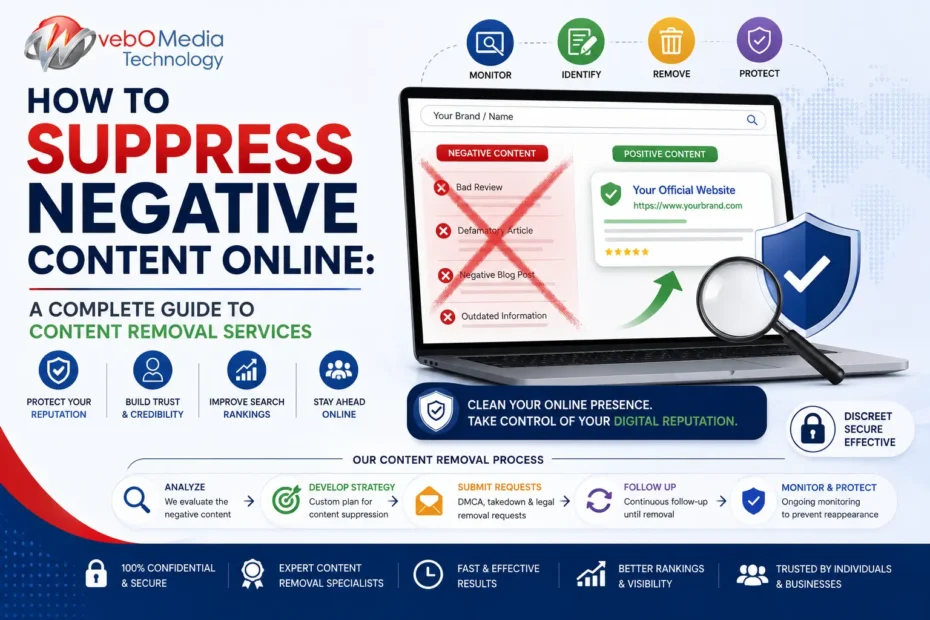
If removal is not possible, businesses often focus on how to suppress negative content by publishing high-quality, relevant content that ranks above unwanted search results. This process, commonly associated with online reputation management (ORM), aims to improve the visibility of positive information rather than hiding or manipulating search results.
Effective suppression strategies include:
- Publishing high-quality website content
- Creating informative blog articles
- Optimizing business profile pages
- Earning mentions on trusted websites
- Building authoritative backlinks
- Maintaining active social media profiles
- Encouraging genuine customer reviews
- Regularly updating your website with valuable content
Over time, these efforts can help positive pages become more prominent in search results, reducing the visibility of less favorable content.
The Role of Website and Content Services in Reputation Management
A professionally designed website combined with consistent content publishing is one of the most effective long-term reputation management strategies. Website and content services help businesses strengthen their online authority by creating optimized service pages, educational blog posts, case studies, and other valuable resources that search engines recognize as trustworthy.
Regularly publishing helpful, well-structured content also improves search visibility, builds customer trust, and supports broader digital marketing efforts. While it may not remove negative content directly, it contributes to a stronger online presence that can help positive information rank more prominently.
Best Practices for Managing Your Online Reputation
Protecting your online reputation requires ongoing attention rather than one-time fixes. Businesses and individuals should monitor their online presence regularly and respond professionally to legitimate concerns. Taking proactive steps can reduce the likelihood of reputation issues and improve long-term search visibility.
Some recommended practices include:
- Monitor branded search results regularly.
- Respond politely to genuine customer feedback.
- Publish fresh, authoritative website content.
- Keep business information accurate and up to date.
- Secure official social media profiles.
- Encourage satisfied customers to leave honest reviews.
- Address legal or policy violations through the appropriate reporting channels.
A consistent reputation management strategy is often more effective than reacting only after a problem appears.
Common Mistakes to Avoid
When faced with negative content, many businesses make decisions that can unintentionally worsen the situation. Attempting to remove legitimate criticism without proper grounds, responding emotionally, or using unethical SEO tactics can damage credibility and, in some cases, attract more attention to the issue.
Avoid these common mistakes:
- Ignoring reputation issues for long periods.
- Posting fake positive reviews.
- Responding aggressively to criticism.
- Using misleading or manipulative SEO techniques.
- Copying content from other websites.
- Hiring agencies that promise guaranteed removals.
A transparent, ethical approach helps build long-term trust with both customers and search engines.
When Should You Consider Professional Content Removal Services?
If harmful online content is affecting your personal reputation, business credibility, or search visibility, professional assistance may be worthwhile. Experienced specialists can evaluate the nature of the content, determine whether it violates platform policies or legal standards, and recommend the most appropriate strategy.
Professional content removal services may be particularly helpful when dealing with:
- Defamatory or false information
- Copyright infringement
- Privacy-related concerns
- Fake reviews or impersonation
- Harmful content affecting business reputation
- Persistent negative search results requiring reputation management
Working with experienced professionals ensures that requests are handled ethically and in accordance with applicable laws and platform requirements.
How Website and Content Services Support Long-Term Brand Growth
Building a strong online reputation goes beyond addressing negative content. A modern, SEO-optimized website supported by valuable content helps businesses establish authority, attract qualified visitors, and improve search engine rankings over time.
By combining website and content services with ethical SEO and reputation management strategies, businesses can strengthen their digital presence, increase customer trust, and create long-term opportunities for growth.
Final Thoughts
Understanding how to suppress negative content begins with knowing the difference between content removal, content takedown, and long-term reputation management. While not every piece of unwanted content can be removed, businesses and individuals have legitimate options for addressing harmful material and improving their online visibility.
A combination of professional content removal services, strategic content creation, and ongoing website and content services can help you build a stronger, more trustworthy digital presence. Rather than focusing solely on removing negative information, investing in high-quality content and ethical reputation management creates lasting value for your brand.
FAQs
1. What are content removal services?
Content removal services help individuals and businesses request the removal of online content that violates platform policies, legal rights, or privacy regulations.
2. What is the difference between content removal and content takedown services?
Content removal is a broader process that may involve websites, search engines, or platforms. Content takedown services specifically focus on requesting that content be removed from the platform where it is published.
3. Can negative Google search results always be removed?
No. If content is lawful and does not violate policies, removal may not be possible. In such cases, improving your online presence through positive, authoritative content may help reduce its visibility over time.
4. How long does it take to suppress negative content?
The timeframe varies depending on the competition for search results, the quality of new content, and the overall reputation strategy. Meaningful improvements often require consistent effort over several months.
5. Why are website and content services important for reputation management?
A professionally optimized website and regularly updated, high-quality content help strengthen your online authority, improve search visibility, and support long-term reputation management efforts.
Protect Your Online Reputation Before Negative Content Damages Your Brand
Negative reviews, defamatory content, fake profiles, copyright violations, and harmful online mentions can affect your business credibility and search visibility. At Webomedia Technology, we provide professional Online Content Removal & Takedown Services and Negative Branding Removal Services to help individuals and businesses protect their digital reputation using ethical, legal, and platform-compliant solutions. Whether you need to remove harmful content or strengthen your online presence, our ORM experts are ready to help.
🛡️ Protect your brand with trusted ORM solutions, including content removal, content takedown, brand monitoring, and reputation management services tailored to your business needs.
