
Introduction
Many business owners invest in a new website expecting it to rank on Google immediately after launch. However, they often discover that an attractive website alone doesn’t generate traffic or leads. This raises a common question: Is SEO part of web development?
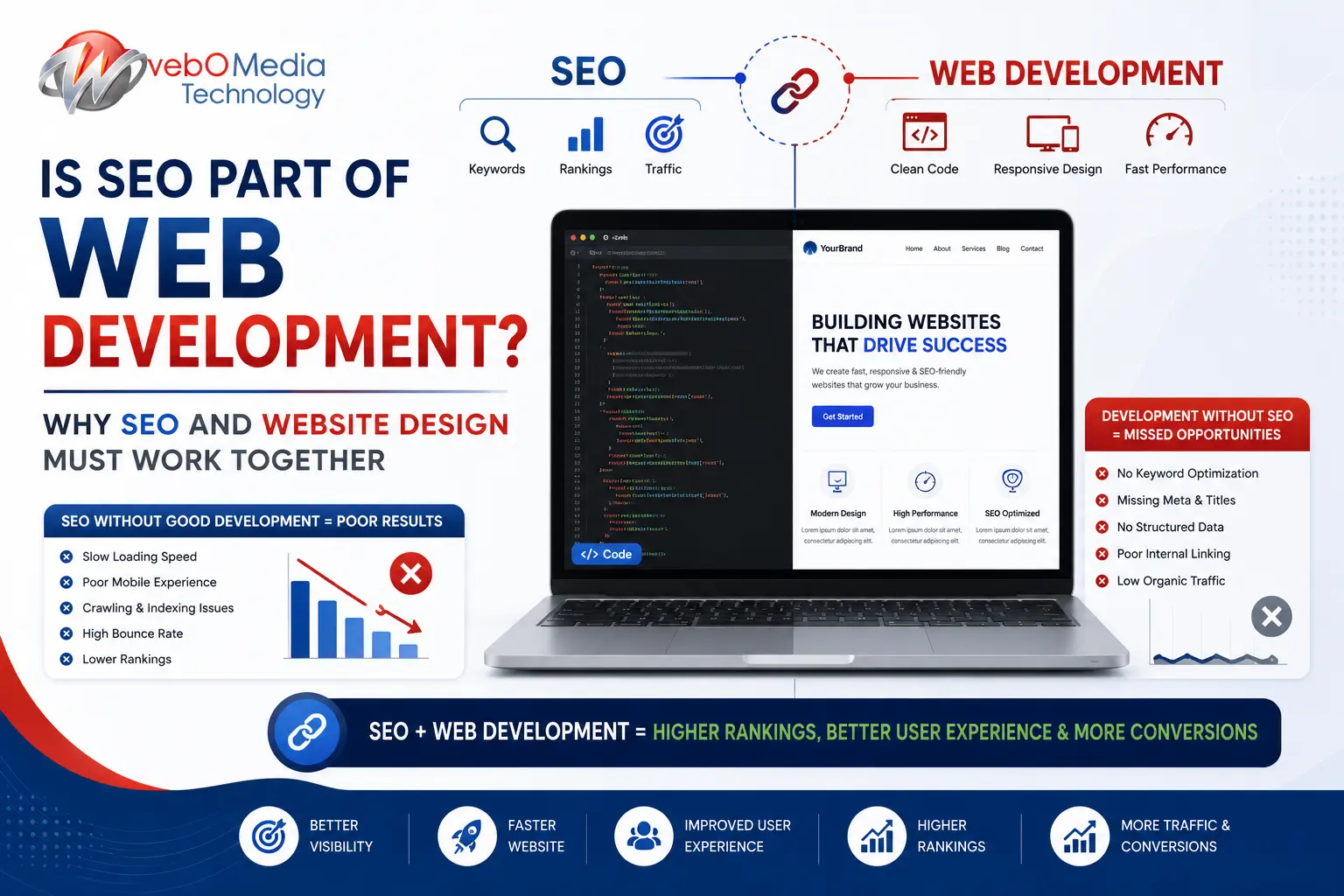
The short answer is yes. While web development and Search Engine Optimization (SEO) are different disciplines, they are closely connected. A well-developed website provides the technical foundation that allows SEO strategies to succeed. Without SEO-friendly development, even the best content and marketing campaigns can struggle to achieve visibility in search engines.
In this guide, we’ll explain how SEO and website design work together, why website development and SEO should be planned from the beginning, and how businesses can build websites that both users and search engines love.
What Does SEO Have to Do with Web Development?
Search Engine Optimization is much more than adding keywords to a webpage. Search engines evaluate how a website is built, how quickly it loads, how easily it can be crawled, and whether it provides a positive user experience.
Web development directly influences many of these ranking factors. Developers create the structure, code, navigation, and technical framework that search engines use to understand a website. If this foundation is poorly built, SEO professionals have to spend additional time fixing technical issues before focusing on content and keyword optimization.
A website designed with SEO in mind gives businesses a significant advantage from day one.
Why SEO Should Be Included During Website Development
Many businesses treat SEO as an afterthought, adding it only after their website is complete. Unfortunately, this approach often leads to unnecessary redesigns, slower performance, and additional development costs.
When website development and SEO are planned together, businesses benefit from:
- Better Google rankings
- Faster website performance
- Improved user experience
- Easier website maintenance
- Higher conversion rates
- Lower long-term SEO costs
Building SEO into the development process creates a stronger foundation for future digital marketing efforts.
How SEO and Website Design Work Together
A successful website balances visual appeal with search engine performance. While designers focus on branding, layout, and user experience, SEO specialists ensure that the website is structured in a way that search engines can easily understand.
Effective SEO and website design include:
- Mobile-friendly layouts
- Clear navigation
- Fast loading pages
- Optimized images
- Proper heading hierarchy
- Internal linking
- Easy-to-read content
- Accessible design
When design and SEO teams collaborate from the beginning, the final website performs better for both visitors and search engines.
Search Engine Optimization Website Design: Key Elements
A successful search engine optimization website design includes much more than visual appearance. Every technical element contributes to better rankings and user engagement.
1. Mobile Responsiveness
Google uses mobile-first indexing, meaning it primarily evaluates the mobile version of your website. Responsive design ensures your website functions smoothly across smartphones, tablets, and desktops, providing visitors with a consistent browsing experience regardless of their device.
2. Fast Website Speed
Page speed is an important ranking factor and directly impacts user satisfaction. Slow-loading websites often experience higher bounce rates and lower conversion rates. Developers improve performance by optimizing images, minimizing code, enabling browser caching, and selecting reliable hosting solutions.
3. Clean URL Structure
SEO-friendly URLs help both users and search engines understand page content. Simple, descriptive URLs improve crawlability and make your website easier to navigate while enhancing overall SEO performance.
4. Proper Heading Structure
Using headings correctly creates a logical content hierarchy. Each page should include one H1 heading followed by H2 and H3 headings where appropriate. This structure improves readability and helps search engines understand the main topics covered on the page.
5. Image Optimization
Large, uncompressed images slow down websites significantly. Developers optimize images by reducing file sizes, using modern formats, and adding descriptive alt text, improving both accessibility and search engine visibility.
6. Secure Website (HTTPS)
Website security plays an important role in building trust with users and search engines. Installing an SSL certificate encrypts data, protects visitors, and contributes positively to search rankings.
Technical SEO Starts with Website Development
Technical SEO forms the foundation of a successful website and should be integrated into the development process rather than added after launch. Search engines rely on a website’s technical structure to crawl, index, and understand its content effectively. When developers implement SEO best practices from the beginning, businesses avoid costly fixes and improve their chances of achieving higher search rankings.
A technically optimized website also delivers a better user experience, loads faster, and performs more efficiently across devices. Important technical SEO elements that should be included during website development include:
- Crawlable website architecture
- XML sitemap creation
- Robots.txt configuration
- Canonical URLs
- Structured data (Schema Markup)
- Core Web Vitals optimization
- Breadcrumb navigation
- Clean HTML and CSS
- Logical internal linking structure
By addressing these technical elements during development, businesses create a strong SEO foundation that supports long-term organic growth and minimizes technical issues after the website goes live.
Common SEO Mistakes During Website Development
Many websites struggle to rank on search engines because SEO considerations were overlooked during the development phase. While a website may look visually appealing, technical mistakes can prevent search engines from properly crawling and indexing its pages. These issues often reduce website performance, negatively impact user experience, and require additional time and investment to fix later.
Avoiding common SEO mistakes during development ensures your website is prepared for long-term success and makes future SEO campaigns far more effective. Some of the most common mistakes include:
- Ignoring mobile responsiveness
- Slow page loading speeds
- Poor website navigation
- Duplicate content
- Missing meta titles and meta descriptions
- Broken internal links
- Large, unoptimized images
- Incorrect heading hierarchy (H1, H2, H3)
- Missing XML sitemap
- Weak internal linking strategy
Identifying and resolving these issues before launching your website helps improve search engine visibility, user engagement, and overall website performance from the very beginning.
Benefits of Combining Website Development and SEO
Website development and SEO should never be treated as separate processes. When developers and SEO specialists work together from the start, businesses benefit from a website that is both visually appealing and optimized for search engines. This integrated approach creates a solid technical foundation, improves user experience, and supports long-term digital marketing success.
Instead of spending additional time correcting technical issues after launch, businesses can focus on growing their online visibility and attracting qualified traffic. The key benefits of combining website development and SEO include:
- Higher search engine rankings
- Increased organic website traffic
- Better user experience across all devices
- Improved lead generation and conversions
- Faster website loading speed
- Greater brand credibility and trust
- Lower bounce rates
- Higher return on investment (ROI)
By integrating SEO into the web development process, businesses build websites that not only look professional but also perform exceptionally well in search results, helping drive consistent traffic, generate quality leads, and support sustainable business growth.
Should You Hire Separate SEO and Web Development Teams?
Not necessarily. Many professional agencies provide both web development and SEO services under one roof. This collaborative approach ensures designers, developers, and SEO specialists work toward the same goals, reducing communication gaps and improving project efficiency.
Choosing a company experienced in both disciplines often results in a website that is visually appealing, technically sound, and optimized for long-term organic growth.
Why Webomedia Technology Builds SEO-Ready Websites
At Webomedia Technology, we believe that every website should be built with SEO at its core. Our development process combines modern design, technical excellence, and search engine optimization to create websites that not only look professional but also perform well in Google search results.
Our websites include:
- Mobile-first responsive design
- SEO-friendly website architecture
- Fast loading performance
- Clean and optimized coding
- Core Web Vitals optimization
- User-focused navigation
- Technical SEO implementation
- Conversion-focused design
Whether you’re launching a new website or redesigning an existing one, we build websites that support your long-term digital marketing success.
Final Thoughts
So, is SEO part of web development? Absolutely. While SEO and web development have different responsibilities, they work together to create websites that are easy to find, easy to use, and built for long-term growth.
A beautiful website without SEO may never reach its target audience, while an SEO strategy built on a poorly developed website will struggle to deliver results. By integrating SEO and website design from the beginning, businesses can improve search rankings, enhance user experience, and maximize their return on investment.
If you’re planning a new website, make sure website development and SEO are treated as one integrated strategy—not two separate services.
Frequently Asked Questions (FAQs)
1. Is SEO included in website development?
Basic SEO should be included during website development, including mobile responsiveness, website speed, clean URLs, technical optimization, and proper page structure. Advanced SEO campaigns typically continue after the website is launched.
2. Why is SEO important for website design?
SEO ensures your website is structured for both users and search engines. A well-designed, SEO-friendly website improves visibility, user experience, and conversion rates.
3. Can I add SEO after my website is built?
Yes, but it is often more expensive and less efficient. Building SEO into the development process avoids technical issues and creates a stronger foundation for long-term rankings.
4. Does website speed affect SEO?
Yes. Fast-loading websites provide a better user experience and are favored by Google, making website speed an important ranking factor.
5. Is technical SEO the responsibility of web developers?
Many technical SEO tasks, such as site architecture, page speed optimization, schema implementation, and crawlability, are implemented during web development, making developers an important part of a successful SEO strategy.
Build a Website That Looks Great & Ranks on Google
A beautiful website is only effective when your customers can find it. At Webomedia Technology, we combine SEO and website design to create fast, responsive, and search engine optimized websites that help businesses increase visibility, attract qualified traffic, and generate more leads. Whether you’re launching a new website or redesigning an existing one, our team ensures website development and SEO work together from day one.
🚀 1,800+ Websites Delivered • SEO-Ready Development • Mobile-First Design • Trusted by Businesses Worldwide