
Is Shopify Good for Blogging?
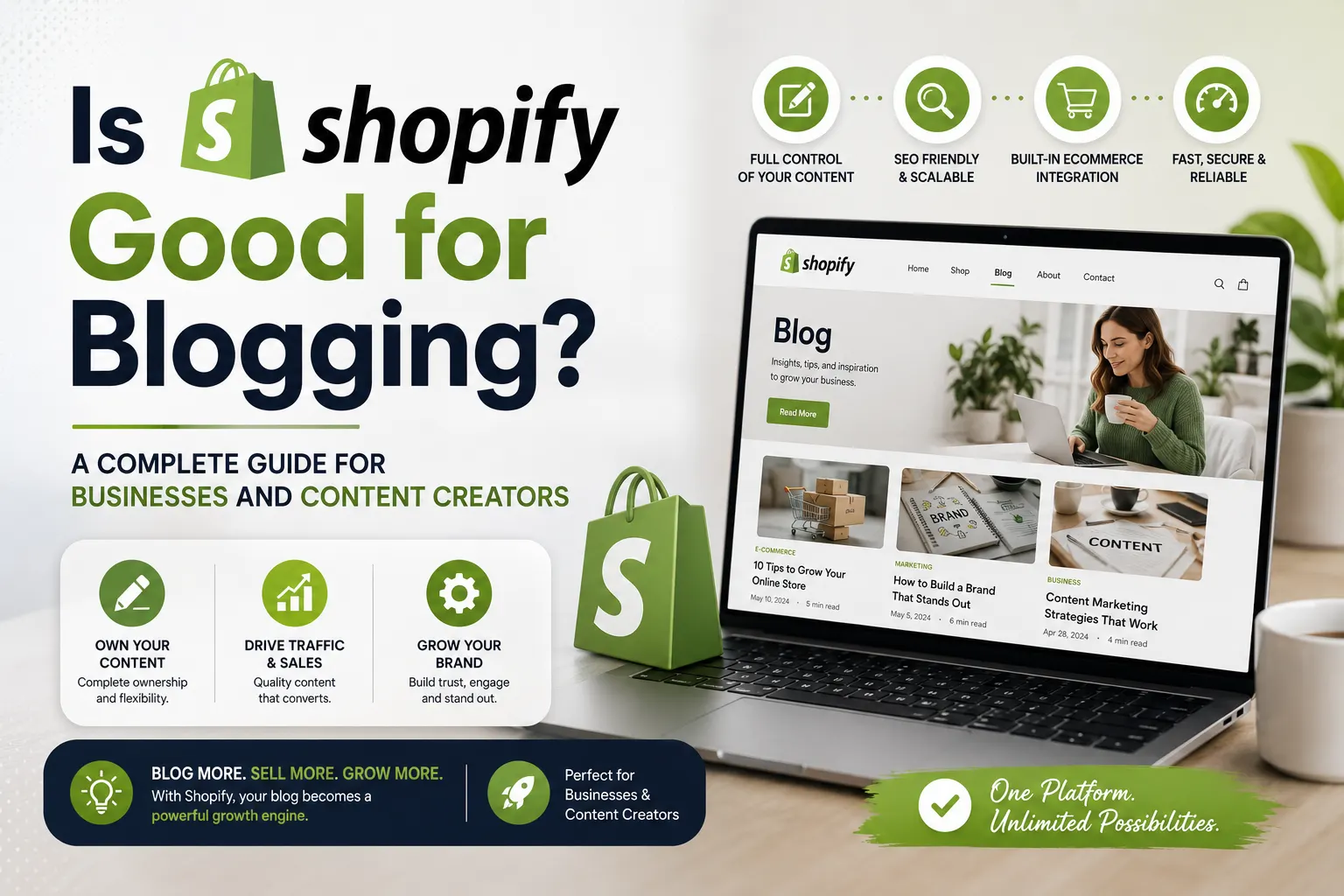
When people think of Shopify, they typically associate it with eCommerce stores, online selling, and product management. However, many business owners and marketers also wonder: Is Shopify good for blogging? The answer is yes—but with some important considerations.
Shopify includes a built-in blogging platform that allows businesses to create, publish, and manage blog content directly within their online store. This makes it possible to combine content marketing and eCommerceunder one platform. For brands focused on driving organic traffic, educating customers, and supporting product sales, blogging on Shopify can be a highly effective strategy.
However, Shopify’s blogging capabilities differ significantly from dedicated content management systems such as WordPress. Understanding the strengths, limitations, and best use cases of Shopify blogging is essential before deciding whether it is the right platform for your content marketing strategy.
Why Blogging Matters for Shopify Stores
Many Shopify store owners focus exclusively on products and overlook the value of content marketing. Yet blogging remains one of the most effective ways to attract organic traffic, improve search engine visibility, and build trust with potential customers.
A well-executed blog can help Shopify stores:
- Rank for informational keywords
- Increase organic website traffic
- Educate potential buyers
- Build brand authority
- Improve customer trust
- Support product discovery
- Generate backlinks
Unlike paid advertising, blog content continues generating traffic long after publication. Every blog post becomes a long-term digital asset capable of attracting visitors at various stages of the buying journey. For many successful Shopify stores, blogging serves as a key driver of sustainable growth.
What Blogging Features Does Shopify Offer?
Shopify provides a built-in blogging system that allows users to create and publish articles without installing additional software. The platform includes essential blogging functionality suitable for most eCommerce businesses.
Key Shopify blogging features include:
- Blog categories
- Article publishing
- Image support
- Tags and organization
- Basic SEO settings
- Comment management
- RSS feeds
- Mobile responsiveness
Store owners can easily create content directly from the Shopify dashboard, making blog management convenient for businesses already using Shopify for eCommerce operations.
While the feature set is not as extensive as WordPress, Shopify offers enough functionality for businesses looking to integrate blogging into their overall marketing strategy.
Shopify Blogging vs WordPress: What’s the Difference?
The comparison between Shopify blogging vs WordPress is one of the most common discussions among business owners. Both platforms support blogging, but they are designed with different priorities.
Shopify is primarily an eCommerce platform with blogging functionality added as a supporting feature. WordPress, on the other hand, was built specifically for content publishing and later expanded into other areas.
Shopify Strengths
- Easy setup and management
- Integrated eCommerce functionality
- Reliable hosting included
- Strong security features
- Minimal technical maintenance
WordPress Strengths
- Advanced blogging capabilities
- Greater content flexibility
- Extensive SEO customization
- Thousands of plugins
- More control over website structure
For businesses focused primarily on selling products, Shopify often provides sufficient blogging functionality. For content-heavy websites or publishers, WordPress generally offers greater flexibility.
SEO Benefits of Blogging on Shopify
One of the biggest questions businesses ask is whether Shopify blogs can rank on Google. The answer is absolutely yes.
Shopify supports many essential SEO features required for successful content marketing, including:
- Custom meta titles
- Meta descriptions
- Mobile-friendly design
- SSL security
- Fast hosting
- Structured site architecture
Blog posts published on Shopify can rank for competitive keywords when supported by strong SEO practices. High-quality content, keyword optimization, internal linking, and backlink acquisition remain the most important ranking factors.
Many successful Shopify stores generate thousands of monthly visitors through blog content that targets informational search queries related to their products and industry.
Advantages of Using Shopify for Blogging
There are several reasons businesses choose Shopify as their blogging platform.
1. Seamless Integration with eCommerce
The biggest advantage is the ability to connect content directly with products. Blog posts can naturally guide readers toward relevant products without requiring separate platforms.
2. Simplified Website Management
Managing content and products from one dashboard reduces complexity and streamlines operations.
3. Reliable Hosting and Security
Shopify handles hosting, updates, and security, allowing businesses to focus on content creation rather than technical maintenance.
4. Strong User Experience
Modern Shopify themes are optimized for mobile devices, fast loading speeds, and user-friendly navigation.
For businesses already using Shopify, adding a blog often represents an efficient and cost-effective content marketing solution.
Limitations of Shopify Blogging
While Shopify offers many benefits, it is important to understand its limitations.
1. Limited Content Management Features
Compared to WordPress, Shopify provides fewer customization options for content organization and publishing workflows.
2. Less SEO Flexibility
Although Shopify supports core SEO requirements, advanced users may find some limitations regarding URL structures, schema customization, and plugin availability.
3. Fewer Blogging Plugins
The Shopify App Store includes useful extensions, but it does not match the vast plugin ecosystem available to WordPress users.
4. Content-Centric Sites May Outgrow Shopify
Businesses whose primary focus is publishing content rather than selling products may eventually require a more advanced content management system.
Understanding these limitations helps businesses determine whether Shopify aligns with their long-term content goals.
Can Shopify Blogs Generate Organic Traffic?
Yes. Many successful Shopify stores generate substantial organic traffic through blogging. Search engines evaluate content quality rather than the platform itself.
A Shopify blog can attract traffic by targeting:
- Informational keywords
- Product-related searches
- Buying guides
- Industry trends
- Frequently asked questions
- Comparison articles
The key to success lies in creating high-quality, search-optimized content that addresses user intent. Businesses that consistently publish valuable content often experience steady growth in search visibility and organic traffic.
Best Blogging Strategies for Shopify Stores
To maximize results, Shopify store owners should follow a structured content marketing strategy.
Focus on Search Intent
Create content that answers questions potential customers are actively searching for.
Target Long-Tail Keywords
Long-tail keywords often have lower competition and higher conversion potential.
Build Topic Clusters
Create multiple articles around related topics to strengthen topical authority.
Use Internal Linking
Link blog posts to relevant product pages and related content.
Update Existing Content
Regular content updates improve accuracy, freshness, and search performance.
A strategic blogging approach helps Shopify stores compete effectively in organic search results.
Shopify Blogging for eCommerce SEO
Blogging plays a critical role in eCommerce SEO because product pages alone often cannot target every stage of the customer journey.
Customers typically move through three stages:
1. Awareness Stage
Users search for educational information and solutions.
2. Consideration Stage
Users compare options and research products.
3. Decision Stage
Users evaluate purchasing opportunities.
Blog content helps Shopify stores reach customers during the awareness and consideration stages, creating opportunities to guide them toward product purchases later in the journey.
Who Should Use Shopify for Blogging?
Shopify blogging works particularly well for:
- eCommerce brands
- Direct-to-consumer businesses
- Product-based companies
- Dropshipping stores
- Lifestyle brands
- Niche retailers
Businesses that rely heavily on content publishing, digital media, or editorial content may find WordPress more suitable. However, for companies whose primary goal is selling products while supporting SEO through content marketing, Shopify provides a strong balance between blogging and eCommerce functionality.
Common Shopify Blogging Mistakes
Many businesses fail to achieve results because they make avoidable mistakes.
Common issues include:
- Publishing without keyword research
- Writing thin content
- Ignoring internal linking
- Failing to optimize metadata
- Publishing inconsistently
- Neglecting content updates
Avoiding these mistakes significantly improves the chances of generating meaningful traffic and revenue through Shopify blogging.
How to Decide if Shopify Is Right for Your Content Strategy
Choosing the right blogging platform depends on your business objectives.
Shopify may be the ideal solution if:
- You already operate a Shopify store
- eCommerce is your primary focus
- You want a simple content management system
- You prefer minimal technical maintenance
- You want blogging and selling under one platform
Businesses that prioritize advanced publishing workflows, extensive content customization, or large-scale editorial operations may benefit from a dedicated CMS such as WordPress.
Frequently Asked Questions About Shopify Blogging
1. Is Shopify good for blogging and SEO?
Yes. Shopify supports essential SEO features and can rank blog content effectively when combined with strong content marketing practices.
2. Can Shopify blogs rank on Google?
Absolutely. Shopify blogs regularly rank for competitive keywords when optimized properly and supported by quality content.
3. Is WordPress better than Shopify for blogging?
WordPress offers more advanced blogging features, but Shopify is often a better choice for businesses focused primarily on eCommerce.
4. How often should I blog on Shopify?
Most businesses should publish at least two to four high-quality blog posts per month to build topical authority and organic traffic.
5. Can blogging increase Shopify sales?
Yes. Blogging helps attract potential customers, build trust, and guide visitors toward relevant products throughout the buying journey.
Conclusion
So, is Shopify good for blogging? For most eCommerce businesses, the answer is yes. Shopify provides the essential tools needed to create, publish, and optimize content while seamlessly integrating blogging with online selling.
Although it may not offer the advanced content management capabilities of WordPress, Shopify’s blogging functionality is more than sufficient for businesses focused on driving organic traffic, improving SEO, and increasing product sales. The key to success is not the platform itself but the quality of your content strategy, keyword targeting, and consistency.
When used correctly, Shopify blogging can become a powerful growth channel that supports both search visibility and long-term revenue generation.
Need Help Building an SEO-Friendly Shopify Blog?
While Shopify offers solid blogging capabilities, getting real results requires the right content strategy, technical SEO setup, and user-focused design. Whether you’re launching a new Shopify store or looking to grow your organic traffic through content marketing, the experts at Webomedia Technology can help.
Our team specializes in Shopify development, SEO optimization, content strategy, and conversion-focused website solutions designed to help businesses attract more visitors and turn them into customers.
Ready to grow your Shopify blog and boost your online visibility? Contact Webomedia Technology today for a free consultation and discover how we can help your business succeed online.