
What Are Blogging and Vlogging?
Content creation has become one of the most effective ways for individuals and businesses to build an audience, establish authority, and generate revenue online. Among the most popular content formats are blogging and vlogging, two strategies that help creators share information, tell stories, and engage with audiences. While both serve similar goals, they differ significantly in format, production process, audience consumption habits, and marketing potential.
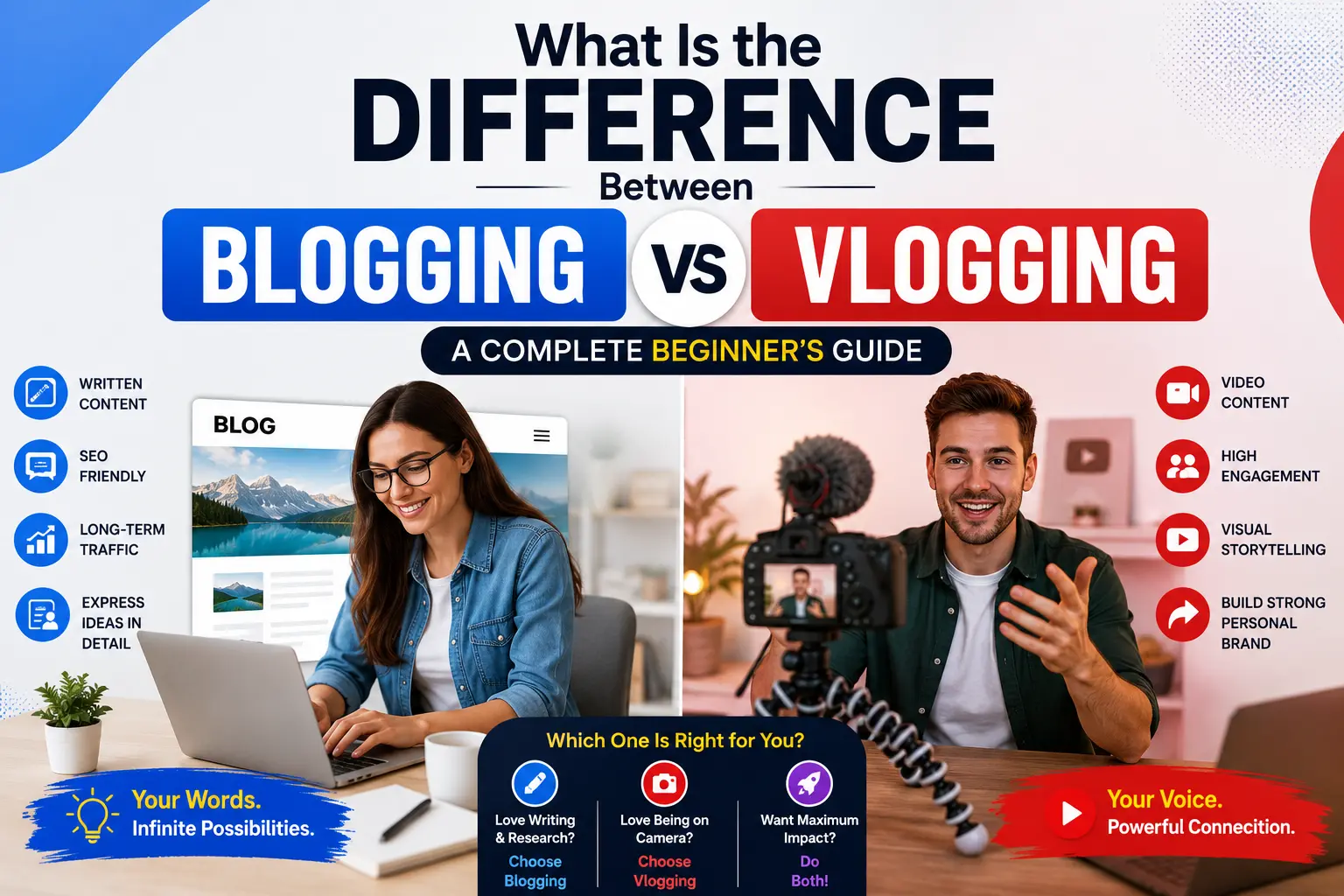
Blogging involves creating written content published on websites or blogs, often supported by images, graphics, and SEO strategies. Vlogging, short for video blogging, involves sharing content through videos published on platforms such as YouTube, TikTok, Instagram, or personal websites.
Understanding the difference between blogging and vlogging is essential for choosing the right content strategy. The best option depends on your goals, audience preferences, available resources, and long-term marketing objectives.
Why Understanding the Difference Matters
Many creators assume blogging and vlogging are interchangeable, but each format offers unique advantages and challenges. Choosing the wrong format can result in slower audience growth, lower engagement, and missed opportunities. Businesses often use content marketing to attract customers, educate prospects, and build trust. The effectiveness of blogging or vlogging depends largely on how your target audience prefers to consume information. Some audiences prefer reading detailed articles, while others engage more with visual and video-based content.
Understanding the strengths and limitations of each format allows businesses and creators to allocate resources effectively. It also helps determine which content type aligns best with your goals, whether that involves improving search engine visibility, increasing social media engagement, generating leads, or building a personal brand.
What Is Blogging?
Blogging is the practice of publishing written content on a website or online platform. Blog posts typically focus on educating readers, answering questions, sharing opinions, or providing solutions to specific problems. Blogging remains one of the most effective content marketing strategies because written content is highly searchable and can generate organic traffic for years.
A successful blog often includes:
- Informative articles
- How-to guides
- Industry insights
- Case studies
- Product reviews
- Opinion pieces
Blogging allows creators to target specific keywords, rank in search engines, and attract visitors actively searching for information. Well-optimized blog posts can continue generating traffic long after publication, making blogging a valuable long-term digital asset. For businesses, blogging is often a cornerstone of SEO and inbound marketing strategies.
What Is Vlogging?
Vlogging refers to creating and publishing video content that documents experiences, shares expertise, entertains audiences, or provides educational information. Vlogs can range from simple talking-head videos to professionally produced content with advanced editing and production techniques.
Popular vlog formats include:
- Educational videos
- Product demonstrations
- Travel content
- Tutorials
- Behind-the-scenes footage
- Lifestyle content
Vlogging has become increasingly popular due to the growth of video-focused platforms and changing consumer preferences. Video allows creators to build stronger emotional connections with audiences through voice, facial expressions, and visual storytelling. While vlogging often requires more production effort than blogging, it can generate higher engagement and stronger audience relationships.
Blogging vs Vlogging: Key Differences Explained
Although blogging and vlogging share similar objectives, they differ in several important ways.
1. Content Format
The most obvious difference is the format itself. Blogging relies primarily on written content, while vlogging uses video as the primary communication medium. Readers consume blog content through text, while viewers engage with visual and audio elements in videos.
2. Production Process
Creating a blog typically requires research, writing, editing, and SEO optimization. Vlogging involves planning, recording, editing, audio management, and video production. While blogging may take longer to write, video production often requires additional technical skills and equipment.
3. Audience Engagement
Videos generally create stronger emotional connections because viewers can see and hear the creator. Blogging, however, often attracts highly engaged readers actively searching for specific information or solutions.
4. Search Visibility
Blogs excel in search engine optimization because search engines can easily crawl and index written content. Vlogs can rank in video search results, but they often require additional optimization to achieve similar visibility.
5. Cost of Creation
Starting a blog typically requires fewer resources than launching a vlog. Basic blogging can begin with a website and content management system, while vlogging may require cameras, microphones, lighting equipment, and editing software.
Advantages of Blogging
Blogging continues to be one of the most effective long-term content strategies available. One major advantage is its ability to generate sustainable organic traffic through SEO. Blog posts can rank for relevant keywords and attract visitors months or even years after publication.
Additional benefits include:
- Lower startup costs
- Strong SEO potential
- Easier content updates
- Greater content ownership
- Long-term traffic generation
- Better performance for detailed topics
Businesses often favor blogging because it supports lead generation, search visibility, and thought leadership while requiring relatively modest production resources.
Advantages of Vlogging
Vlogging offers several unique advantages that written content cannot fully replicate. Video content is highly engaging and allows creators to communicate personality, emotion, and expertise more effectively. This often results in stronger audience relationships and increased trust.
Benefits of vlogging include:
- Higher engagement rates
- Stronger personal branding
- Better storytelling opportunities
- Increased social media reach
- Enhanced audience retention
- Greater visual impact
For creators focused on building communities or showcasing products and experiences, vlogging can be a powerful content marketing tool.
Blogging vs Vlogging for SEO
When comparing blogging vs vlogging for SEO, blogging generally has a significant advantage. Search engines are designed to understand and index written content efficiently, making blog posts highly effective for targeting keywords and ranking in search results.
Blogging supports:
- Keyword optimization
- Internal linking
- Featured snippets
- Long-form content
- Search intent targeting
‘Vlogging can also contribute to SEO, particularly when videos are embedded on websites and optimized with transcripts, descriptions, and metadata. However, written content remains the foundation of most successful SEO strategies. Businesses focused on organic search growth often prioritize blogging while using video content to support broader marketing goals.
Blogging vs Vlogging for Business Growth
Businesses can benefit from both blogging and vlogging, but the ideal choice depends on industry, audience, and objectives. Blogging is particularly effective for generating leads through search engines and educating prospects during the buying journey. Vlogging often excels at building trust, demonstrating products, and increasing social media engagement.
For example:
- B2B companies often benefit more from blogging.
- Personal brands frequently grow faster through vlogging.
- eCommerce brands often combine both approaches.
- Educational businesses may use blogging for SEO and vlogging for audience engagement.
The most successful businesses integrate both formats into a unified content strategy rather than choosing one exclusively.
Which Is Easier to Start: Blogging or Vlogging?
For most beginners, blogging is easier and more affordable to start. Creating a blog requires basic writing skills, a website, and a content publishing platform. The barrier to entry is relatively low, making blogging accessible to individuals and small businesses with limited budgets.
Vlogging often requires additional resources, including:
- Camera equipment
- Audio recording tools
- Video editing software
- Production knowledge
While modern smartphones have reduced equipment costs, creating high-quality video content still requires more time and technical expertise than writing a blog post. Beginners looking for a cost-effective content strategy often start with blogging before expanding into video content.
Can Blogging and Vlogging Work Together?
The most effective content creators rarely choose between blogging and vlogging—they combine both. A blog post can be repurposed into a video, and a video can be transformed into a written article. This approach maximizes content reach while catering to different audience preferences.
Combining blogging and vlogging provides several advantages:
- Increased content visibility
- Better SEO performance
- Greater audience reach
- Improved brand authority
- More content distribution opportunities
Businesses that integrate written and video content often achieve stronger results than those relying on a single format.
Common Mistakes When Choosing Between Blogging and Vlogging
One of the biggest mistakes creators make is selecting a format based on trends rather than audience preferences. Another common error is underestimating the time required to consistently produce quality content. Some businesses abandon blogging before seeing SEO results, while others invest heavily in video production without a clear strategy.
Additional mistakes include:
- Ignoring audience behavior
- Publishing inconsistent content
- Neglecting SEO optimization
- Focusing on quantity over quality
- Failing to measure performance
Success in either format depends on consistency, audience understanding, and strategic execution.
How to Choose the Right Content Strategy
The choice between blogging and vlogging should be based on your goals, strengths, and audience preferences. If your primary objective is generating organic search traffic, blogging is often the strongest option. If building a personal brand and increasing engagement are priorities, vlogging may deliver better results.
Ask yourself:
- Does my audience prefer reading or watching?
- Do I enjoy writing or creating videos?
- What resources are available?
- What are my long-term marketing goals?
The answers will help determine the most effective content strategy for your situation.
Frequently Asked Questions About Blogging and Vlogging
1. What is the main difference between blogging and vlogging?
The primary difference is the content format. Blogging uses written content, while vlogging relies on video content to communicate information and engage audiences.
2. Which is better for SEO, blogging or vlogging?
Blogging generally performs better for SEO because written content is easier for search engines to crawl, index, and rank.
3. Can I do both blogging and vlogging?
Yes. Many successful creators and businesses combine blogging and vlogging to maximize visibility, audience reach, and content performance.
4. Is vlogging more profitable than blogging?
Profitability depends on the niche, audience size, monetization strategy, and content quality. Both formats can generate significant revenue when executed effectively.
5. Should beginners start with blogging or vlogging?
Blogging is often easier and less expensive to start, making it a practical option for beginners with limited resources.
Conclusion
The debate between blogging and vlogging is not about determining which format is universally better—it is about understanding which format best aligns with your audience, goals, and resources. Blogging remains a powerful strategy for SEO, lead generation, and long-term organic growth, while vlogging excels at engagement, storytelling, and personal branding.
For most businesses and creators, the strongest approach is not choosing one over the other but integrating both into a comprehensive content marketing strategy. By leveraging the strengths of written and video content, you can reach a broader audience, improve visibility, and create a more impactful online presence.