
Search Engine Optimization (SEO) has evolved significantly over the past decade, yet many outdated beliefs and misconceptions continue to circulate across blogs, forums, and social media. These SEO myths often lead businesses to invest time and resources into strategies that no longer work—or worse, harm their website’s performance.
Whether you’re a business owner, digital marketer, blogger, or beginner learning SEO, separating fact from fiction is essential for building a successful long-term strategy.
Modern SEO is no longer about tricking search engines with keyword stuffing or buying thousands of backlinks. Instead, it’s about creating valuable content, delivering an excellent user experience, and building trust with both users and search engines.
In this guide, we’ll debunk the most common SEO myths, explain why they persist, and reveal what actually helps websites rank higher in today’s search landscape.
What Are SEO Myths?
SEO myths are outdated assumptions or false beliefs about how search engines rank websites. These misconceptions often originate from old optimization techniques, misunderstandings of Google’s algorithms, or advice that was once effective but has become obsolete.
Because search engine algorithms constantly evolve, tactics that worked years ago may no longer produce results. Unfortunately, many website owners continue following these outdated practices, believing they are still essential for ranking.
Understanding the difference between proven SEO strategies and common myths helps businesses make informed decisions and focus on techniques that deliver sustainable growth.
Why Believing SEO Myths Can Hurt Your Website
Following inaccurate SEO advice can waste valuable time, reduce website performance, and even lead to ranking declines.
Many businesses spend months optimizing for outdated ranking factors while ignoring the elements that truly matter, such as content quality, user experience, and technical performance.
Relying on myths may result in:
- Poor content quality
- Keyword stuffing
- Unnatural link building
- Low user engagement
- Reduced search visibility
- Missed ranking opportunities
Successful SEO requires adapting to current best practices rather than relying on outdated shortcuts.
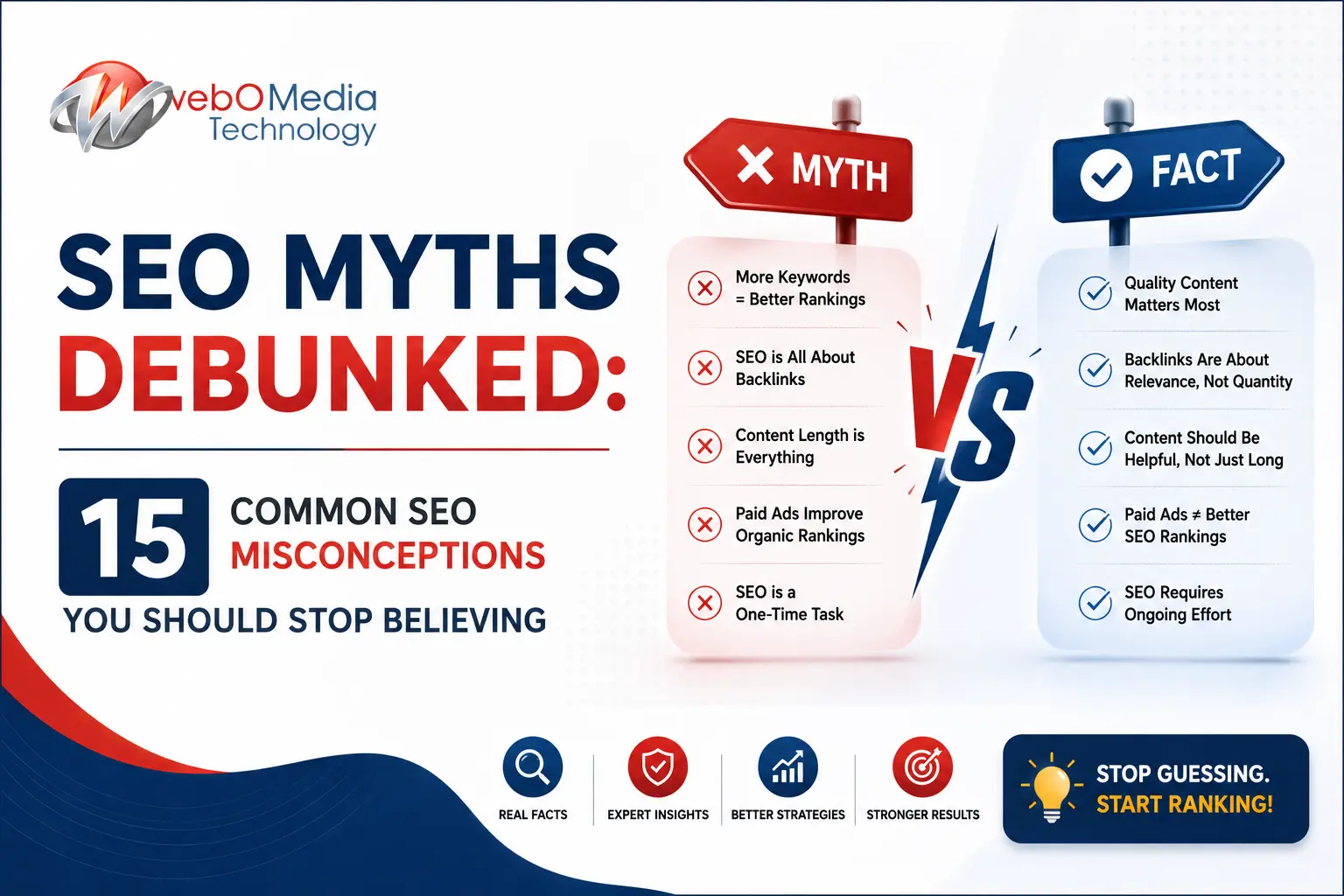
Myth #1: SEO Is a One-Time Process
One of the biggest misconceptions is that SEO only needs to be done once.
In reality, SEO is an ongoing process that requires continuous monitoring, optimization, and updates. Search algorithms change regularly, competitors improve their websites, and user behavior evolves over time.
Maintaining strong rankings requires updating content, improving technical performance, earning quality backlinks, and regularly analyzing search performance.
Businesses that treat SEO as a long-term strategy often achieve more stable and sustainable results.
Myth #2: More Keywords Mean Better Rankings
Many people believe repeating the same keyword dozens of times will improve rankings.
This practice, known as keyword stuffing, is outdated and can negatively affect both readability and user experience.
Modern search engines understand context, synonyms, and semantic relationships between words. Instead of repeating keywords excessively, focus on naturally covering the topic in depth while answering users’ questions.
Well-written content that satisfies search intent performs far better than pages overloaded with repetitive keywords.
Myth #3: More Backlinks Always Improve SEO
Backlinks remain an important ranking factor, but quality matters far more than quantity.
A single backlink from a highly authoritative and relevant website can provide more value than hundreds of low-quality links from unrelated sources.
Building links through valuable content, partnerships, and genuine industry recognition is far more effective than purchasing or artificially creating backlinks.
Strong backlink profiles are built through trust, not volume.
Myth #4: Meta Keywords Still Matter
Years ago, websites could include meta keyword tags to help search engines understand page topics.
Today, major search engines no longer use meta keywords as a ranking factor because the tag was widely abused through keyword stuffing.
Instead, website owners should focus on writing compelling title tags, informative meta descriptions, and content that aligns with user intent.
Optimizing for people rather than outdated metadata practices delivers better long-term results.
Myth #5: Ranking #1 Guarantees Success
Appearing in the first position on Google is valuable, but rankings alone don’t guarantee business success.
If your page fails to satisfy user expectations or encourage action, visitors may leave without converting.
Successful SEO focuses not only on traffic but also on engagement, trust, conversions, and customer satisfaction.
A page ranking third with an excellent user experience may outperform the top-ranking page in generating leads or sales.
Myth #6: AI Content Cannot Rank on Google
As AI writing tools become more common, many people assume search engines automatically penalize AI-generated content.
The reality is that Google prioritizes content quality rather than the method used to create it.
Helpful, accurate, and original content can perform well regardless of whether AI assisted in the drafting process.
However, publishing unedited, low-quality AI content without human review often leads to poor user engagement and weak SEO performance.
The best approach combines AI efficiency with human expertise and editorial oversight.
Myth #7: Longer Content Always Ranks Better
Content length alone does not determine rankings.
Some search queries require detailed guides, while others are best answered with concise explanations.
Instead of aiming for a specific word count, focus on covering the topic comprehensively and satisfying user intent.
Quality, relevance, structure, and usefulness matter far more than simply writing longer articles.
Myth #8: Social Media Likes Directly Improve Rankings
A popular misconception is that Facebook likes, Instagram followers, or social media shares directly influence Google’s rankings.
While social engagement can increase visibility and attract more visitors, these signals are not direct ranking factors.
However, social media can indirectly support SEO by increasing brand awareness, generating backlinks, and driving traffic to valuable content.
The relationship between social media and SEO is supportive rather than direct.
Myth #9: You Need to Submit Your Website to Google Regularly
Many beginners believe websites must be manually submitted to Google repeatedly.
In reality, Google’s crawlers continuously discover and index new pages through links, sitemaps, and internal navigation.
Submitting an XML sitemap and maintaining good technical SEO is generally sufficient.
Search engines automatically revisit websites and update their indexes over time.
Myth #10: Duplicate Content Always Results in a Penalty
Duplicate content is often misunderstood.
While intentionally copying content from other websites is discouraged, duplicate content does not automatically trigger a penalty.
Search engines usually select one version as the preferred result while filtering others.
Using canonical tags, creating original content, and avoiding unnecessary duplication helps search engines understand which version should rank.
Myth #11: Technical SEO Doesn’t Matter
Even exceptional content can struggle if a website has technical issues.
Slow loading speeds, broken links, poor mobile usability, crawl errors, and indexing problems all affect search performance.
Technical SEO ensures search engines can efficiently crawl, understand, and index website content.
A strong technical foundation supports every other aspect of SEO.
Myth #12: SEO Produces Instant Results
SEO is often mistaken for paid advertising.
Unlike PPC campaigns that generate immediate traffic, SEO requires patience.
Building authority, earning backlinks, improving content quality, and gaining user trust takes time.
Most successful SEO campaigns show meaningful improvements over several months rather than a few days or weeks.
Businesses that remain consistent usually achieve stronger long-term returns.
Myth #13: User Experience Has No Impact on SEO
Modern search engines increasingly prioritize user satisfaction.
Fast-loading pages, intuitive navigation, mobile responsiveness, accessible design, and engaging content all contribute to positive user experiences.
When visitors stay longer, interact with content, and find answers quickly, websites often perform better over time.
SEO and user experience are no longer separate disciplines—they work together.
Myth #14: Local SEO Is Only for Small Businesses
Many large organizations assume local SEO is irrelevant.
However, businesses with physical locations, regional offices, or location-based services can all benefit from optimizing for local searches.
Google Business Profile optimization, local citations, customer reviews, and location-specific content improve visibility for nearby customers.
Local SEO remains valuable regardless of company size.
Myth #15: SEO Is Dead
Every few years, someone claims that SEO is no longer relevant.
In reality, SEO continues to evolve alongside search technology.
Voice search, AI-powered search experiences, semantic understanding, and user intent have changed optimization strategies, but they have not eliminated the need for SEO.
Businesses that adapt to these changes continue attracting qualified organic traffic and building long-term digital visibility.
SEO isn’t dead—it has simply become more user-focused and sophisticated.
Best Practices for Modern SEO
Rather than following outdated myths, focus on proven strategies that create lasting results.
Successful SEO involves:
- Creating helpful, people-first content
- Understanding search intent
- Optimizing page speed and Core Web Vitals
- Building authoritative backlinks naturally
- Improving website usability
- Maintaining strong internal linking
- Updating existing content regularly
- Demonstrating expertise and trustworthiness
- Optimizing for mobile devices
- Monitoring performance through analytics
These practices align with modern search engine expectations and improve long-term ranking potential.
Frequently Asked Questions
1. What are SEO myths?
SEO myths are outdated or incorrect beliefs about how search engines rank websites. Following them can lead to ineffective optimization strategies and missed opportunities.
2. Does keyword stuffing improve SEO?
No. Excessively repeating keywords reduces readability and may negatively impact user experience. Natural keyword usage and comprehensive topic coverage are far more effective.
3. Is SEO still worth investing in?
Yes. SEO remains one of the most cost-effective digital marketing strategies for generating long-term organic traffic and building brand authority.
4. Can AI-generated content rank on Google?
Yes. High-quality AI-assisted content that is accurate, useful, and enhanced with human expertise can rank well when it satisfies user intent.
5. How long does SEO take to show results?
SEO is a long-term strategy. Depending on competition, website authority, and optimization efforts, noticeable improvements often take several months.
Final Thoughts
Believing outdated SEO myths can hold your website back and prevent you from achieving sustainable growth in search results. As search engines continue to evolve, success depends on understanding user intent, creating valuable content, and delivering an outstanding website experience rather than chasing shortcuts or outdated tactics.
The most effective SEO strategies are built on consistency, quality, and trust. By focusing on proven best practices instead of common misconceptions, businesses can improve rankings, attract qualified visitors, and establish lasting authority in their industry.
In today’s competitive digital landscape, the key to successful SEO isn’t finding secret tricks—it’s creating content and experiences that genuinely help your audience while aligning with modern search engine guidelines.